
Spectacular dimorphism
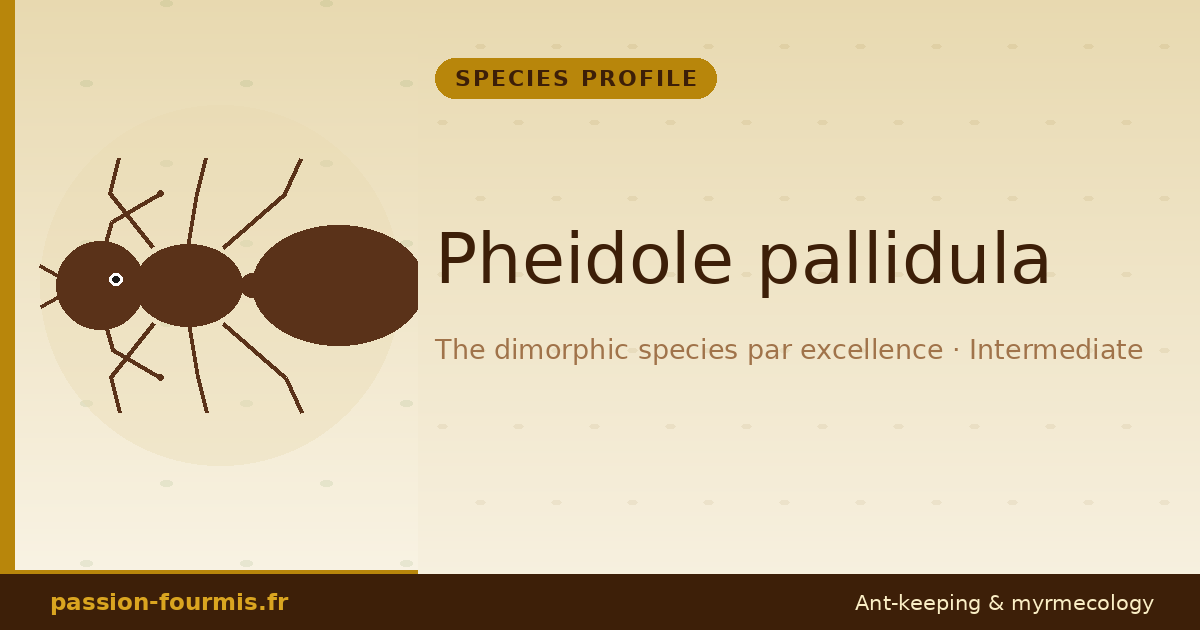
Pheidole pallidula is a Mediterranean species marked by a very pronounced dimorphism between two worker castes: the minors (2-3 mm) that do most of the work, and the majors (4-5 mm) with an enormous head almost as big as their thorax. These big-headed soldiers are tasked with crushing seeds and defending the colony.
A semi-granivorous species like Messor, it enjoys seeds but also dead insects and honeydew.
Dimorphism in Pheidole is one of the most studied examples of morphological differentiation within a single colony. Soldiers aren’t born by chance: it’s the amount and type of food given to the larvae that determines their fate (minor or major).
Founding
Nuptial flight in summer (June-August) after a storm. Fast claustral founding: 5-8 weeks for the first workers (minors only at first; the majors appear later when the colony is larger).
Explosive growth
Pheidole pallidula has one of the fastest growth rates among European species. In 3 years, a colony can reach 5000 workers. Plan for a large modular nest.
Conditions
Warmth (24-28°C in summer), moderate hibernation (3 months at 10-12°C), medium humidity. Plaster, Ytong or packed-soil substrate.
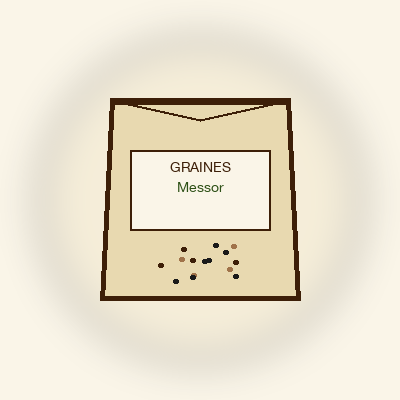
Small seed mix for Pheidole
A varied mix of small seeds (chia, poppy, fonio) suited to the size of Pheidole.
Frequently asked questions
- How big is Pheidole pallidula?
- Queen: 7-9 mm — Workers: 2-5 mm (dimorphic).
- How long does a Pheidole pallidula queen live?
- A Pheidole pallidula queen lives approximately 10-15 years.
- How does Pheidole pallidula found a colony?
- Foundation type: Claustral — Polygynous: Variable.
- What does Pheidole pallidula eat?
- Diet: Seeds, insects.
- Does Pheidole pallidula need a diapause (hibernation)?
- Diapause: Yes (moderate).
- What temperature and humidity does Pheidole pallidula require?
- Temperature: 24-28°C — Humidity: 40-60%.
- How large does a Pheidole pallidula colony grow?
- Colony size: 10,000-30,000.
- Is Pheidole pallidula suitable for beginners?
- Difficulty level: 3/5 (intermediate).
Sources & references
Authoritative references for further reading on Pheidole pallidula:
Leave a Reply