
An ant colony isn’t static. It grows, sometimes slowly in the first years, then quickly. Your setup must follow this growth without rushing it.
Phase 1: The test tube (0 to ~50 workers)
This is the founding setup. A 16×150 mm tube with wet cotton at one end, the queen and first workers in the middle, a dry cotton plug at the other end. This phase lasts 6 months to 1 year.
At this stage, no outworld is needed. Food is delivered directly at the tube’s entrance on a small surface (a jar lid, a glass plate).
Phase 2: Tube + outworld (50 to ~300 workers)
When the tube gets too small (workers crowding at the entrance, lack of room), connect the outworld. It’s a small pot, a plastic box, or a terrarium 10-15 cm across.
Connect the tube to the outworld via a small hose or by placing the open end of the tube directly into the area. An escape barrier is essential (paraffin oil or Fluon).
Many beginners think the tube must be replaced with a plaster nest at this stage. That’s a mistake. Keep the tube as the main nest as long as the colony is comfortable in it. The queen has made her burrow there, don’t evict her.
Phase 3: First nest (300 to 1500 workers)
When the colony saturates even the tube + half an outworld, introduce a first horizontal nest (plaster or Ytong, medium format, 15×10 cm with 4-6 chambers).
Connect this nest to the outworld via a hose. Leave the tube in place alongside, simply disconnected from the area. The ants will migrate naturally to the roomier new nest. No forcing.
Phase 4: Large nest + large outworld (1500 to 10,000 workers)
Beyond 1500 workers, plan for:
- A larger nest or a modular, expandable nest
- A spacious outworld (30×20 cm minimum)
- Differentiated zones: wet zone, dry zone, feeding zone, waste zone
Phase 5: Large-capacity terrarium (10,000+ workers)
For very large colonies (Pheidole, Messor, Tetramorium), a real 50×30 cm terrarium or larger becomes necessary. Several interconnected nests, several zones, more complex management.
At this stage, you’re a seasoned keeper: you’ve accompanied your colony for 5 to 10 years.
Golden rules for transitions
- Always connect the new space, never force the migration
- Keep the old nest available during the transition (often several weeks)
- No transition during hibernation, wait for spring
- Prepare the new nest in advance: humidification, checks, escape barrier
During transitions, never directly touch the queen and the brood. The workers will move them to the new nest themselves when they judge it ready. This can take a few days to several weeks.
Modular expandable ant nest
A nest with possible extensions to follow the colony's growth without changing everything.
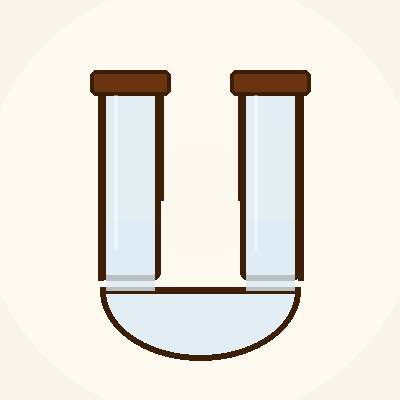
6mm connection tubes
To connect nests, outworlds and founding tubes together.
Leave a Reply