
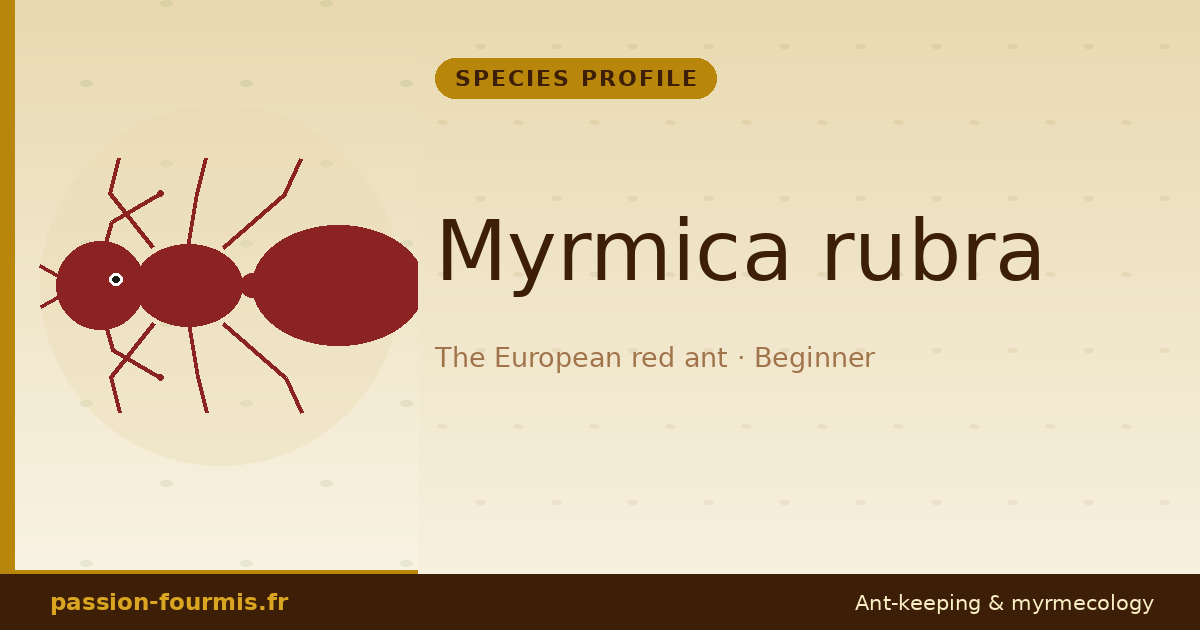
A small red stinger, but endearing
Myrmica rubra is a common ant in Europe, recognisable by its orange to brick-red colour and its modest size (4-5 mm). It lives in damp meadows, shady gardens and under stones. Its quirk: it can sting, and the sting, though not very painful, can surprise beginners.
It’s a polygynous species: a single colony can have several queens (sometimes several dozen). This makes founding much easier: you can collect several queens together and let them cohabit.
Unlike most European ants, which spray formic acid at their enemies, Myrmica rubra has a true stinger like wasps. Its sting, similar to that of a red forest ant, itches for a few minutes.
Semi-claustral founding
Founding is semi-claustral: unlike Lasius niger, the Myrmica queen needs a little outside food during the founding phase. Offer a fruit fly and a drop of sugar water from the first week. This is important: without feeding, many foundings fail.
The first workers appear in 6 to 10 weeks. Since the colony is polygynous, two or three queens together significantly speed up the start.
Keeping conditions
Myrmica rubra likes high humidity (60-70%) and moderate temperatures (20-24°C). Too much heat stresses it. It loves nests of packed soil or well-moistened Ytong. Hibernation is long (3-4 months at 5°C), far more pronounced than in Mediterranean species.
The flight takes place in July-August, often after a late-day shower. The queens fly little: you often find them walking on the ground, sometimes in groups. Collect several into the same tube to take advantage of polygyny.
Growth and size
Colonies stay modest (500 to 2000 workers) but can have several active queens. It’s a lively and observable species: the workers are always on the move, carrying eggs and tending larvae very visibly.
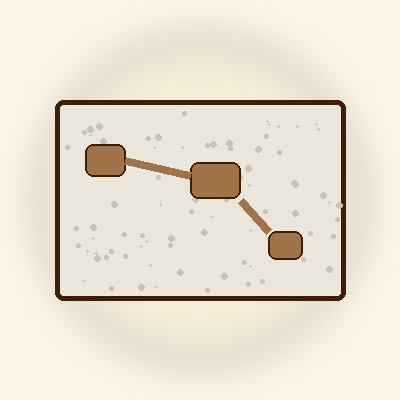
Ytong nest with outworld
The ideal format for Myrmica rubra, which likes humidity and room to forage.
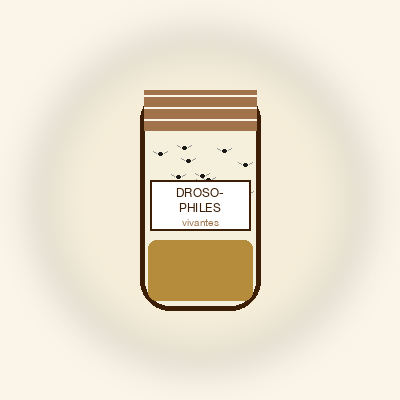
Live fruit flies (home culture)
A home fruit-fly culture provides the basic protein food for a Myrmica colony.
Frequently asked questions
- How big is Myrmica rubra?
- Queen: 6-7 mm — Workers: 4-5 mm.
- How long does a Myrmica rubra queen live?
- A Myrmica rubra queen lives approximately 10-15 years.
- How does Myrmica rubra found a colony?
- Foundation type: Semi-claustral — Polygynous: Yes (highly polygynous).
- What does Myrmica rubra eat?
- Diet: Insects, honeydew.
- Does Myrmica rubra need a diapause (hibernation)?
- Diapause: Yes (long).
- What temperature and humidity does Myrmica rubra require?
- Temperature: 20-24°C — Humidity: 60-70%.
- How large does a Myrmica rubra colony grow?
- Colony size: 500-2000.
- Is Myrmica rubra suitable for beginners?
- Difficulty level: 2/5 (easy).
Sources & references
Authoritative references for further reading on Myrmica rubra:
Leave a Reply