
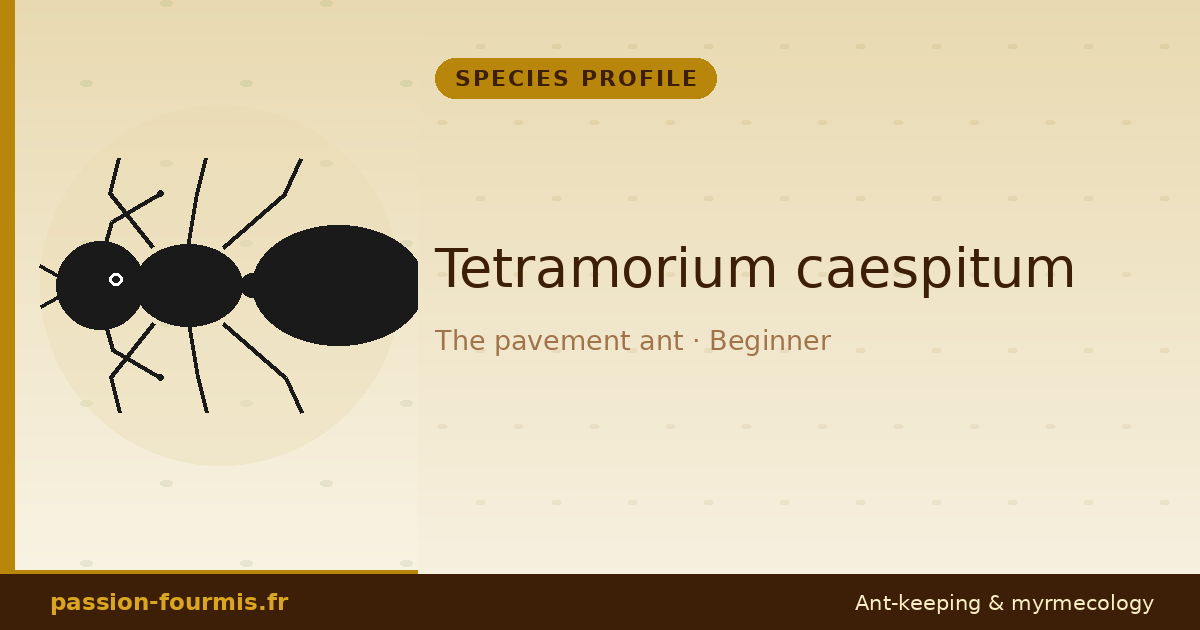
The little pavement ant
Tetramorium caespitum is the tiny ant you see in tight clusters on warm pavements in summer. Its workers measure just 2 to 4 mm, but their numbers and aggressiveness make it a fascinating species to watch. It can form large colonies within a few years.
An omnivorous, opportunistic species, Tetramorium loves proteins (insects) as much as carbohydrates (honeydew, sugary drops). Its hardiness and ease of keeping make it an ideal candidate for starting out.
- Very active and observable: always on the move
- Fast growth once founding is over
- A voracious species: easy to feed
- Small size = a compact setup is enough
Fast claustral founding
Nuptial flight in June-July, just after the first summer heat. The queens are black, measure 7-9 mm, and are often found on the ground after the flight. Allow 4 to 8 weeks for the first workers to appear in the test tube. Founding is claustral: no feeding during this phase.
Explosive growth
Once past the first 30 workers, the colony really takes off. Eggs pile up, the first hunts begin, and within 2-3 years you can have 1000+ workers.
Hibernation and conditions
Classic hibernation of 3-4 months at 4-8°C. For the rest of the year: 22-26°C, humidity 40-60%. Plaster or Ytong substrate as you prefer, but plan early for a spacious outworld, as the colony quickly becomes numerous.
Tetramorium workers are so small they escape through the slightest gap. An anti-escape Fluon or paraffin oil is essential on the edges of the outworld.
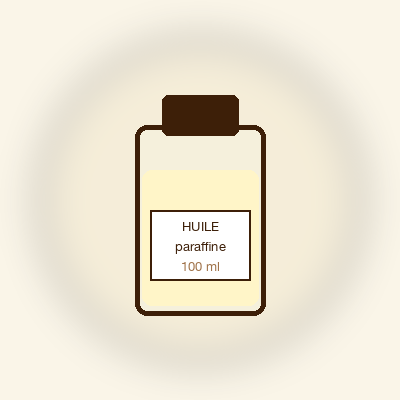
Paraffin oil escape barrier
A thin layer on the walls stops small ants from climbing. Essential for Tetramorium.
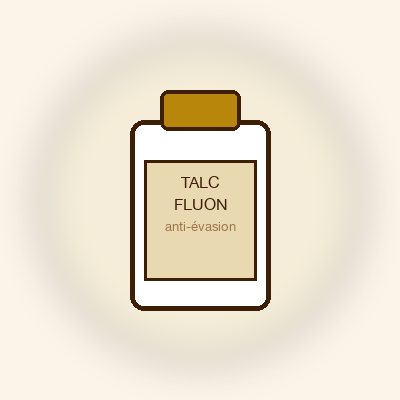
Fluon PTFE for ants
An alternative to oil, brushed on as a fine powder on the edges of the outworld.
Frequently asked questions
- How big is Tetramorium caespitum?
- Queen: 7-9 mm — Workers: 2-4 mm.
- How long does a Tetramorium caespitum queen live?
- A Tetramorium caespitum queen lives approximately 10-15 years.
- How does Tetramorium caespitum found a colony?
- Foundation type: Claustral — Polygynous: Variable.
- What does Tetramorium caespitum eat?
- Diet: Omnivorous, insects, sugars.
- Does Tetramorium caespitum need a diapause (hibernation)?
- Diapause: Yes (4 months).
- What temperature and humidity does Tetramorium caespitum require?
- Temperature: 22-26°C — Humidity: 40-60%.
- How large does a Tetramorium caespitum colony grow?
- Colony size: 5,000-15,000.
- Is Tetramorium caespitum suitable for beginners?
- Difficulty level: 1/5 (beginner).
Sources & references
Authoritative references for further reading on Tetramorium caespitum:
Leave a Reply