
Lighting and heating are two questions that come up often among keepers. The answer is very different depending on the species and the seasons. Here’s how to make the right choices.
Should you light the nest?
No. The nest (where the colony lives) must stay in total darkness. Ants live in the soil or under stones: light stresses them, drives them to move, and disrupts their biological cycles.
The outworld, on the other hand, can be lit naturally (ambient daylight) or with a weak LED. Avoid lighting the nest directly at all costs.
You can observe your nest at any time using a transparent red film (sold for darkroom lighting). Ants don’t perceive red light and carry on their activities normally. That’s the secret to observing without stressing them.
Should you heat the nest?
The answer depends on the species:
Temperate species (Lasius, Formica, Myrmica, Tetramorium)
The ambient temperature of your home (18-24°C) is generally enough. No active heating. Hibernation in the cold is mandatory in winter.
Mediterranean species (Messor, Pheidole, Crematogaster)
They like a bit more warmth (24-28°C) during the active period. A terrarium heat mat placed under part of the nest (1/3) creates a welcome thermal gradient. The ants move to the zone that suits them.

Terrarium heat mat 14W
To create a warm spot under the nest of Mediterranean species. Adjustable with a separate thermostat.
Tropical species (Atta, Camponotus maculatus)
Active heating is essential. Maintain 25-30°C day and night. Ideally with a thermostat to prevent overheating.
Desert species (Cataglyphis)
Very hot by day (30-35°C) and cooler at night (18-22°C). Recreate this cycle with a programmable heat mat.
Thermoregulation: an advanced practice
Some keepers recreate natural sun-basking behaviour: ants seek out sunny spots to warm their brood. How to simulate it:
- A low-power incandescent bulb (15-25W) placed 30 cm above part of the nest
- A day/night cycle with a timer (12h ON, 12h OFF, mimicking the natural rhythm)
- Effect: a gradual temperature rise by day, cooling at night
Observed benefits: faster brood growth, more active behaviour.
The trap of too-high temperatures
Prolonged exposure to more than 30°C can kill a temperate colony. Ants are sensitive to heat. If the room with the nest exceeds 28°C in summer (a heatwave), move it to a cooler room. A cellar or basement at 20°C is ideal for temperate species in summer.
Winter: preparing for hibernation
For temperate species, the gradual drop in autumn temperatures triggers hibernation. In a heated home, this drop doesn’t happen naturally.
Solution: move the nest to a cooler place (garage, sheltered balcony, fridge crisper drawer) in November, then to 4-8°C for 3-4 months.
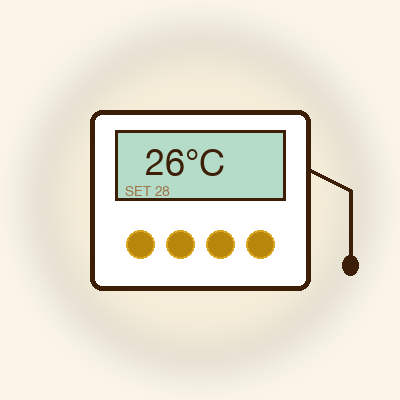
Digital thermostat with probe
To precisely control the heating of your setup. Adjustable from 0 to 50°C.
Leave a Reply