The natural terrarium is the most immersive approach to ant keeping: faithfully recreating the ants’ natural habitat with soil, plants, stones and wood. It’s a demanding but visually spectacular undertaking.
When to choose this approach
The natural terrarium suits:
- Mature colonies (more than 500 workers)
- Digging species (Lasius, Tetramorium, Aphaenogaster)
- Keepers who prioritise aesthetics over direct observation
Conversely, it is not suitable for starting a colony: the ants disappear into the substrate, you see nothing, and founding is very hard to monitor.
The container
A glass terrarium 40×30×30 cm minimum, with a well-ventilated lid. For large colonies, plan for 60×40 cm.
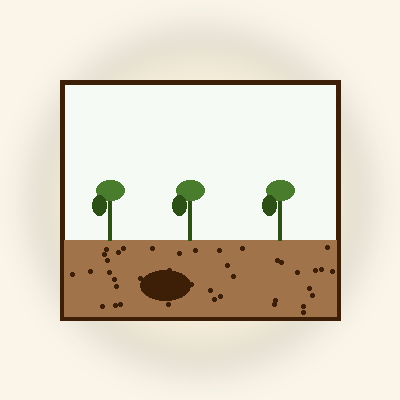
Glass terrarium 40x30cm
An ideal format for a natural ant terrarium. Good ventilation, easy access, side observation possible.
The substrate: the basis of everything
The substrate recreates the natural soil. The best mix for most species:
- 60% garden soil (sieved, sterilised in the oven for 30 min at 100°C to kill parasites)
- 20% coarse sand
- 15% sphagnum peat
- 5% activated charcoal (anti-mould)
Depth: 10 to 15 cm minimum to allow digging.
Garden soil contains mite eggs, other insect larvae, sometimes pathogenic fungi. Baking at 100°C for 30 min eliminates these risks. Without sterilisation, you risk introducing parasites that will destroy your colony.
Plants and decor
A few hardy plants for atmosphere:
- Mosses (Sphagnum) for humid zones
- A small maidenhair-type fern
- Succulents if there’s a dry zone (Sedum, Sempervivum)
- Flat stones to create micro-habitats
- Dead branches (birch, pine) for vertical decoration
Avoid treated plants and toxic species.
Managing humidity
Keep a humidity gradient: a wet zone (misted once a day) and a dry zone. Most species will choose their own burrow in the area that suits them. Use a manual mister.
Introducing the colony
Introduce the founding nest (tube or plaster nest) directly into the terrarium. Let the ants migrate gradually into the substrate. Allow 2 to 4 weeks for them to establish their galleries in the soil.
In a natural terrarium, you’ll mainly see the outworld and the trips outside. The chambers stay hidden. Accept this loss of direct observation in exchange for a more respectful and more beautiful environment.
Maintenance
Mist the wet zone every 2-3 days. Remove visible waste (corpses, prey remains) with tweezers. Watch for mould. No need to clean the substrate: it’s a mini ecosystem.
Leave a Reply