Intermediate

Nest lighting and heating: practical thermoregulation
Should you heat your nest? Light it? Best practices for temperate and tropical species.
An automatic humidification system for your holidays
Going on holiday without worrying about dehydration: autonomous humidification systems.
Transparent acrylic nest: maximum observation
For those who want to see everything: the acrylic nest gives total observation of the colony. A tutorial.
Natural ant terrarium: the biotope approach
Recreating the ants’ natural habitat in a terrarium. An advanced but visually spectacular approach.
Upgrading your setup as the colony grows
From the test tube to the large terrarium: how and when to upgrade your gear as the colony grows.
Camponotus vagus
The large black carpenter ant of Europe. Impressive, slow, and especially rewarding.
Camponotus ligniperdus
The large European carpenter ant, bicoloured black and brick-red. Slow but impressive growth.
Crematogaster scutellaris
The acrobat ant with its raised gaster. Visually spectacular and arboreal.
Camponotus cruentatus
The large black-and-red carpenter ant of the south. Spectacular, intermediate, and polymorphic.
Camponotus herculeanus
The boreal giant, the largest Camponotus in Europe. Lives in the dead wood of cold forests.
Camponotus barbaricus
The Maghreb carpenter ant, heat-loving, with highly polymorphic castes. Very beautiful in captivity.
Manica rubida
The reddish alpine ant, hardy, with a painful sting. An uncommon myrmicine in captivity.
Pheidole pallidula
The dimorphic species par excellence: workers and big-headed soldiers. Spectacular.
Aphaenogaster subterranea
The subterranean ant, discreet but fascinating. Observable cooperative-hunting behaviour.
Camponotus pilicornis
A hairy Iberian carpenter ant, hardy and adaptable. A good compromise between size and ease.
Crematogaster sordidula
A small Mediterranean acrobat ant with a raised gaster. More discreet than its cousin scutellaris.
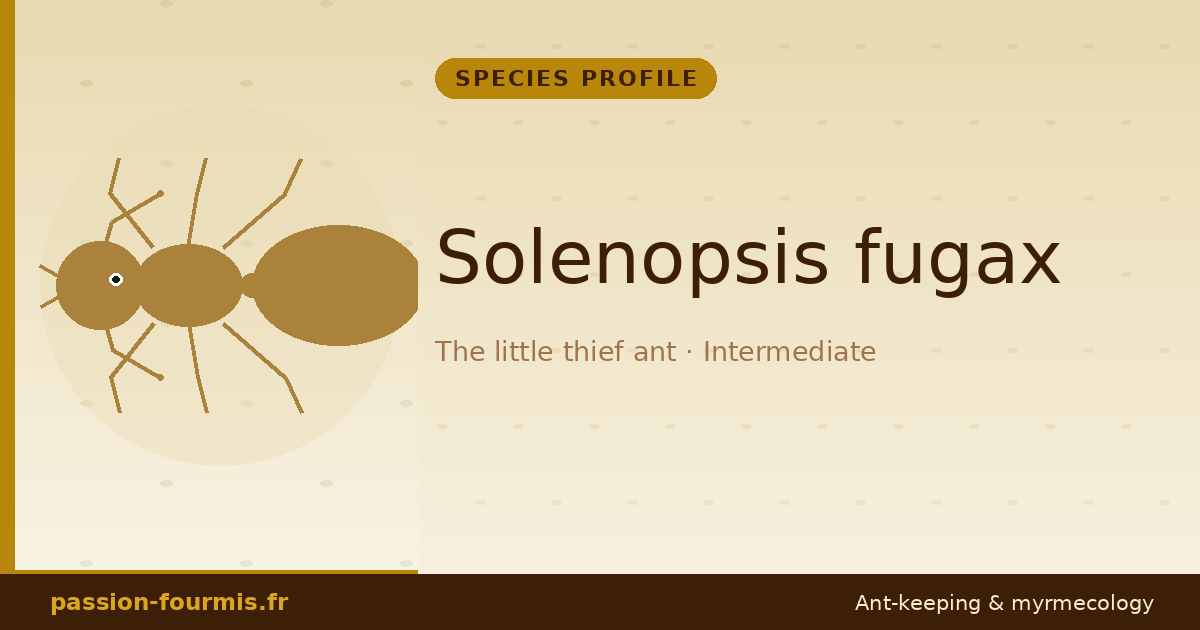
Solenopsis fugax
The little thief ant, tiny but formidable. To observe a unique parasitic behaviour.
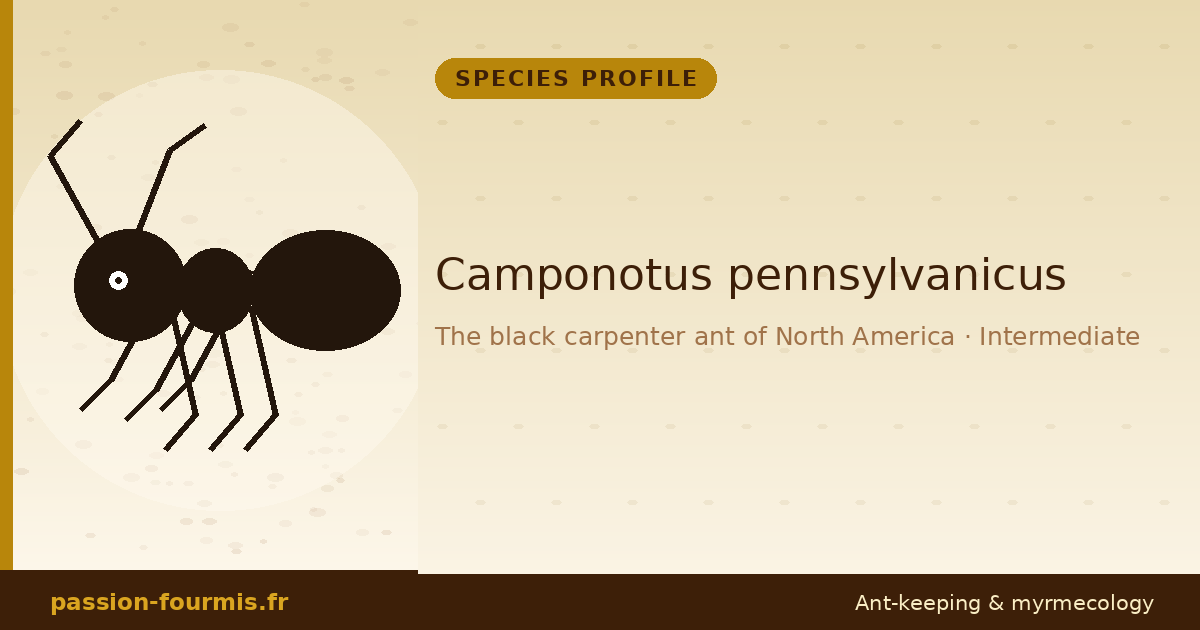
Camponotus pennsylvanicus
The black carpenter ant of North America, large, living in dead wood. The North American counterpart of C. ligniperdus.
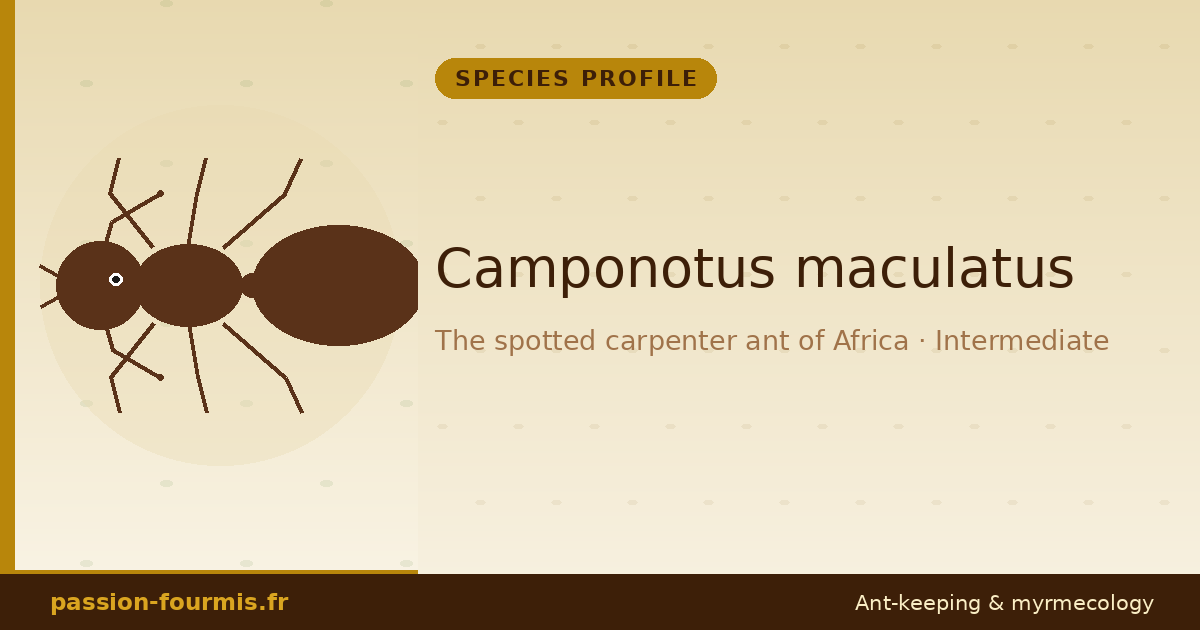
Camponotus maculatus
The spotted carpenter ant of Africa. For keepers who enjoy tropical challenges.
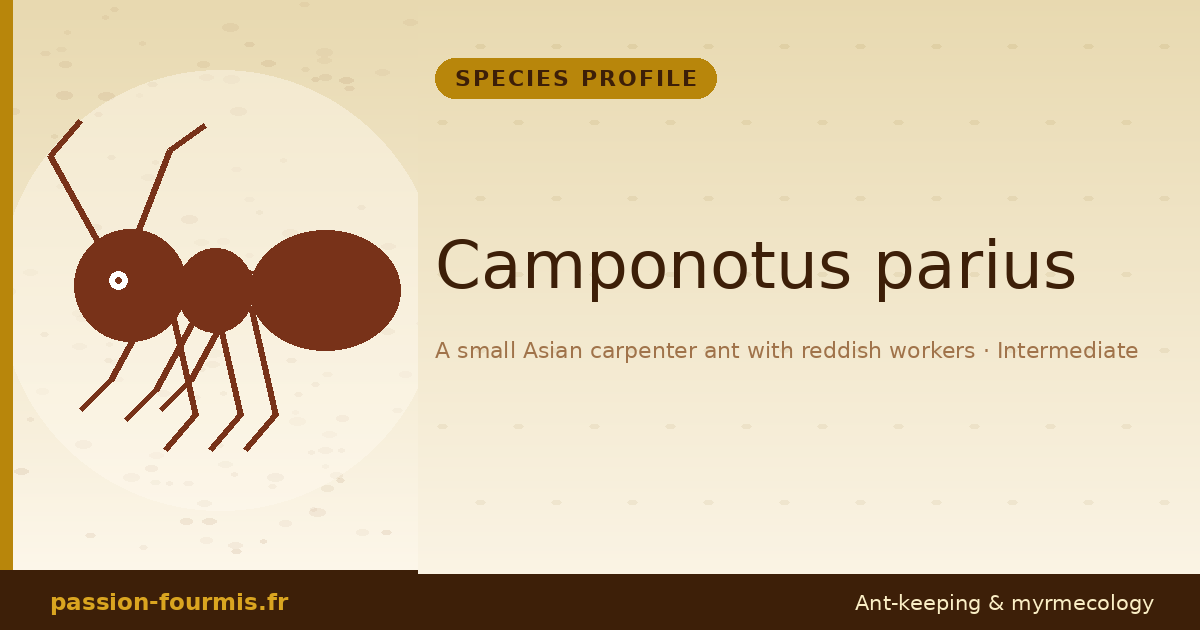
Camponotus parius
A small Asian carpenter ant with reddish workers. A good gateway to tropical species.